Museums Alaska:
2026 Conference Schedule
Theme: Sharing Stories, Shaping Change
Partner: Alaska State Libraries, Archives, and Museums
October 7-10 | Juneau
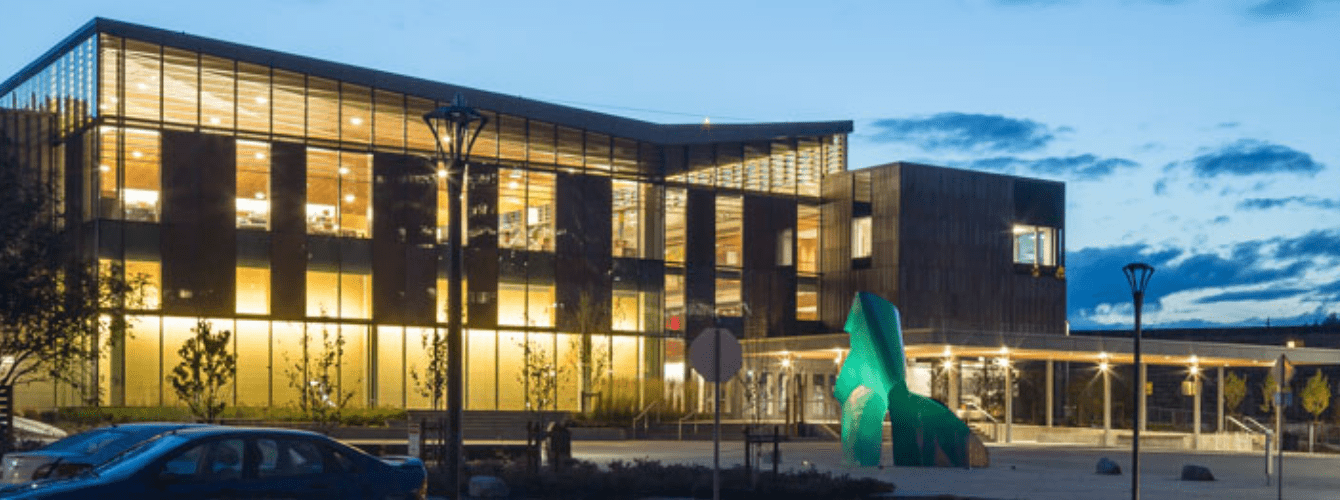
The Father Andrew P. Kashevaroff Building (APK Building)
Sealaska Heritage Institute Walter Soboleff Building (SHI)
Schedule
Conference agenda
Sessions and workshops will be held at The Father Andrew P. Kashevaroff Building (APK Building) on Wednesday, October 7, and Thursday, October 8.
On Friday, October 9, workshops (and one session) will be held at the APK Building, and all other sessions will be held at Sealaska Heritage Institute's Walter Soboleff Building (SHI).
- Ellen Carrlee, Conservator, Alaska State Museum
- Adriana Botelho-Alvarez, Curator of Collections Access, Alaska State Museum
- Emily Galgano, Archives and Collections Director, Sealaska Heritage Institute
- Alaska State Archives staff
Grab a friend and get a quick lunch before the afternoon’s events.
- Emily Galgano, Archives and Collections Director, Sealaska Heritage Institute
Register for a complimentary tour of the Alaska State Museum conservation lab, exhibition shop, collections prep room, and collections storage. Maximum of 16 people per tour.
- Adriana Botelho-Alvarez, Curator of Collections Access, Alaska State Museum
Participants will develop skills and make a hat mount they can bring back to their institution. Workshop will cover the basics of ethafoam carving, padding, and covering. Options for exhibit-ready finishes will be presented as well as various mounting hardware options. Includes a quick look in the ASM Long-term galleries to see various hat mounts in action. Participants will develop skills and make a hat mount they can bring back to their institution.
- Jackie Manning, Curator of Exhibits, Alaska State Museum
- Aaron Elmore, Exhibit Specialist, Alaska State Museum
- Alaska State Archives staff
- Emily Galgano, Archives and Collections Director, Sealaska Heritage Institute
- Alaska State Archives staff
- Adriana Botelho-Alvarez, Curator of Collections Access, Alaska State Museum
Join the Museums Alaska Board for their annual business meeting. There will be time at the end for questions and comments.
- Will also be streamed via Zoom
- Alaska State Archives staff
- Adriana Botelho-Alvarez, Curator of Collections Access, Alaska State Museum
Join us at The Father Andrew P. Kashevaroff Building (APK Building) for our opening night event with heavy hors d’oeuvres.
All conference registrants are automatically registered for this event at no extra cost. You may purchase an additional ticket for a spouse, partner, or other guest for $50.
- Hosted by the Alaska State Libraries, Archives, and Museums
Welcome to the conference, thank you to our donors, congratulations to our field award winners!
Together, we will explore the fundamental purpose and mission of cultural and heritage centers and museums. At their core, these institutions are grounded in three essential elements: tangible objects, authentic stories and experiences, and meaningful social interaction—all in service of learning.
These principles reflect an important shift captured by Stephen E. Weil’s assertion that museums are “not about something, but for someone,” emphasizing the critical role of public service in shaping institutional priorities.
This talk will share examples, practical frameworks, and guiding philosophies, enabling participants to leave with a deeper understanding of who they serve, why their institutions truly matter within their communities, and how to approach their work with renewed clarity and purpose.
- Polly McKenna-Cress, Principal, Alusiv, Inc.
- John Hagen, Curator of Indigenous Arts and Initiatives, Anchorage Museum
Across the United States, Indigenous communities are reclaiming authority over how their cultural heritage is preserved, represented, and shared. This session explores the process of building a new cultural heritage museum in Anchorage that centers Indigenous voices, self-determination, and sovereignty in storytelling, led by a small team of non-shareholders or descendants of the Chugach region. Topics will discuss approaches that prioritize community authority from conception, including governance models, cultural protocols, collections stewardship, and interpretive planning rooted in Indigenous knowledge systems.
At the same time, museums face challenges posed by an increasingly polarized political climate, where Diversity, Equity, and Inclusion (DEI) initiatives face public scrutiny and funding for arts, culture, and heritage is declining. This session examines how the Museum is navigating these pressures while staying true to Indigenous values, community needs, and long-term cultural goals. We will look at the Chugach Museum’s strategies for building a community-driven capital campaign.
Participants will learn how the Museum’s design development process over the last year is inclusive, culturally grounded, and ethically sound—while building broad regional support that can sustain the project long term.
- Monica Garcia-Itchoak, Executive Director, Chugach Museum
Session sponsored by Design and Production, Inc.:
- Bob Curtis-Johnson, Sole-Member and Principal Consultant, SummitDay LLC
Bowl lunches from Breeze-In will be provided (order your preference during registration). Attendees will choose the affinity group to eat lunch and network with. Each group will be assigned a different location. You can choose to bring your own lunch instead, or choose a bowl and not attend an affinity/roundtable lunch.
All conference registrants are automatically registered for this event at no extra cost.
- Directors
- Collections
- Exhibits and Programming
- Emerging Museum Professionals
A General Shop tour will include review and benefits of some of our must-have tools. Participants will also learn valuable skills in how to safely move large, heavy and awkward items around their spaces with only one or two people. They will gain hands-on experience with hand trucks, four-wheeled dollies, chain hoists and other lifting equipment. They will learn how to properly and safely load a four-wheeler and how to raise a large crate using small levers and blocks. LIMITED SPACE.
- Jackie Manning, Curator of Exhibits, Alaska State Museum
- Aaron Elmore, Exhibit Specialist, Alaska State Museum
At the Anchorage Museum, we see ourselves as a place not only for art and objects but as a true third space- a gathering place outside of home and work where community happens. Through innovative programs we endeavor to cultivate trust, engage people and ideas, and reach audiences beyond our exhibitions.
Our most popular recurrent programs transform the Museum into a social hub–from staying open late to gathering around music and activities, we become a cultural crossroad where artists, families, and visitors all connect in unconventional ways. These programs break down the barriers of traditional museum – going and show how cultural institutions like museums can serve as everyday community spaces for belonging, creativity, and connection.
Sharing innovative ideas, case studies and a framework for program-building that a museum of any size or focus could incorporate into their own organization, this session will be a deep dive into public programming from idea to production. Whether your museum is just starting out with new staff or thinking about curating programming more specifically for your own community, this session will explore ideas and prompts to help navigate engagement with a changing world.
- Rebecca Pottebaum, Director of Programs, Anchorage Museum
- Danni Crombie, Community Engagement Manager, Anchorage Museum
What objects should a museum exhibit? What stories should it tell? Are we under an obligation to push our visitors a little bit to think critically? In this session, we’ll consider what to exhibit, and how to interpret history that isn’t necessarily yours, might be sacred, how and why to tackle tough topics, and how even to better understand the mundane. This gallery session will use objects as points of contact to launch into topics central to museum work, regarding how and why we share the stories we do, even when – or perhaps especially when — the stories of place are not necessarily easy or comfortable. Stories of power, resilience, civil rights and relationships are the focus of this session. We shouldn’t avoid tough topics just because they are emotionally charged or problematic. Often, discussion of topics involving powerful objects can lead to deeper respect and appreciation of diverse opinions that prove exhibition and interpretation worthwhile.
- Steve Henrikson, Curator of Collections, Alaska State Museum
- Mary Irvine, Curator of Statewide Services, Alaska State Museum
- Dr. Caren S. Oberg, Curator of Collections and Interpretation, Valdez Museum & Historical Archive
This workshop is an opportunity to consider commonalities and
differences between regenerative systems and museum practices. The session will begin with
an introduction to the attributes of regenerative systems. In small group discussions,
participants will then track ways Alaska museums enable these attributes. Attendees will
imagine regenerative stories, programs and goals for our museums and communities. Let’s
begin charting Alaska museums’ place as part of the global movement for regenerative
communities!
- Anjuli Grantham, PhD Heritage Scholar and Community Organizer
Join your colleagues for a fun night of bowling and networking at downtown bowling alley, PINZ. Pizza, salad, and drinks will be provided.
You can join a lane and bowl, or come to watch and talk. Bowling shoes will be provided – bring socks.
PINZ also has a concession stand if you want to buy additional drinks or food. Feel free to drop buy to grab a slice and say hi, even if you don’t stay long.
All conference registrants are automatically registered for this event at no extra cost.
Programming will be held in APK and Sealaska Heritage Institute on Friday. We will have granola bars and breakfast snack items in both buildings, but with food restrictions in the session rooms, it might be better to plan ahead and grab breakfast at a local coffeeshop or diner before sessions start.
The keynote will share examples, practical frameworks, and guiding philosophies, enabling participants to leave with a deeper understanding of who they serve, why their institutions truly matter within their communities, and how to approach their work with renewed clarity and purpose.
While the keynote will introduce key ideas, the workshop will provide an opportunity to put many of these concepts into practice.
How can we better connect, honor, and support relationships with communities? How can we improve access, outreach, and engagement? In the first part of this working session, presenters will share examples of two recent community-based projects, with an emphasis on how the collaborations were developed and how museum resources were tailored to communities. In the second part, participants will engage in a facilitated discussion about collaboration with a focus on how museum staff can connect communities with collections and provide capacity building. Strategies and community-based project ideas will be documented and shared out with conference attendees.
- Dawn Biddison, Community Outreach and Engagement Specialist, National Museum of Natural History
- Melissa Shaginoff, Engagement Specialist; Alaska Specialist, Outreach and Engagement Planning Office, National Museum of the American Indian
Session sponsored by First National Bank Alaska:

A session about managing successful internship programs in archives and museums. Topics will include: designing internship work plans, choosing projects, managing multiple interns at a time with varying levels of expertise, and balancing work that needs to be done with making sure the interns get the most out of the experience. There will be time for discussion at the end.
- Emily Galgano, Archives and Collections Director, Sealaska Heritage Institute
In this interactive session, museum program staff from the Institute of Museum and Library Services (IMLS) will discuss grant eligibility requirements, share examples of recently funded projects, and help you find the best fit for your project ideas among IMLS funding opportunities. The session will primarily focus on our two biggest grant programs: Museums for America and Inspire Grants for Small Museums, diving into what makes a strong grant proposal, tips and tricks for planning project schedules and budgets, and the ins and outs of the peer review process. Whether you’re a first-time applicant or a seasoned grantee, this session will prepare you for the next IMLS grant application deadline coming up on November 13, 2026.
- Sarah Glass, Senior Museum Program Officer/Tribal Liaison, Institute of Museum and Library Services (IMLS)
- Adriana Botelho-Alvarez, Curator of Collections Access, Alaska State Museum
- Emily Galgano, Archives and Collections Director, Sealaska Heritage Institute
Enjoy lunch on your own, or grab a new conference friend or three and find a local restaurant to try.
Museums are vital community spaces that engage visitors through their architectural space and interactive exhibits. These multisensory experiences can be enriching, but they may also create barriers to access—from physical navigation challenges to communication and sensory limitations.
While the Americans with Disabilities Act (ADA) and state and local building codes give standards to remove common barriers in physical spaces, these laws do not offer detailed guidance for assessing and resolving barriers related to exhibit design. As a result, key areas such as signage, closed captioning, large print, and braille are often left unaddressed.
This workshop will focus on exhibit signage and inclusive design strategies to improve accessibility for all visitors. The didactic portion will introduce:
- Recommendations from the Smithsonian Guidelines for Accessible Exhibition Design.
- Key principles from WCAG 2.1 (Web Content Accessibility Guidelines).
Plain or clear language and user engagement. - Best practices for closed captioning.
- 2010 ADA Standards for Accessible Design related to instructional signage, pictograms, reach ranges, and protruding objects.
Participants will also engage in hands-on activities to identify accessibility elements in sample exhibits and collaborate in small groups performing mini surveys.
- Sherri von Wolfe, AIA, LEED GA, ADAC Senior Architect, atelier corbeau – art & architecture
- Eva deLeon, , MA, CRC, ADAC, CEO and Founder, EquityWorks Accessibility Alliance, LLC (EWAA)
- Michelle "Mell" Toy, Contractor, EquityWorks Accessibility Alliance, LLC (EWAA)
The Alaska Office of History and Archaeology (OHA) is widely recognized for administering grants and supporting preservation efforts—but our role extends far beyond distributing funds. At its core, OHA is dedicated to amplifying community voices, strengthening local identity, and supporting the stories that define Alaska’s diverse cultural landscapes.
This session explores OHA’s Community Impact focus, highlighting how designations, grants, and collaborative projects help communities share their histories in meaningful and accessible ways. Participants will learn how OHA evaluates and supports projects not just on financial merit, but on their ability to preserve narratives, foster local pride, and build long-term cultural value. Using examples from recent initiatives, we will discuss how community-driven storytelling shapes public understanding, encourages stewardship, and enriches the broader heritage ecosystem.
Attendees will gain insight into how OHA partners with communities—large and small—to support projects that honor the past while strengthening connections for future generations. This session invites museums, cultural organizations, and local partners to reimagine heritage work as a powerful tool for community impact and shared storytelling, with OHA serving as both a funder and a collaborator in elevating Alaska’s cultural narratives.g soon.
- Patty Relay, Grants Administrator 2, Department of Natural Resources, Division of Parks and Outdoor Recreation
- Tasha Elizarde, Curatorial & Development Director, Mana
- Joshua Alebeza Branstetter, Creative Storytelling Director, Mana
- Christina Parks-Zlinszky, Director of Visitor Services, University of Alaska Museum of the North
- Sheila Hernandez, Museum Services Manager, Alaska State Museum (Juneau) & Sheldon Jackson Museum (Sitka)
Session sponsored by First National Bank Alaska:
- Ellen Carrlee, Conservator, Alaska State Museum
- Adriana Botelho-Alvarez, Curator of Collections Access, Alaska State Museum
Join us at the Juneau-Douglas City Museum for a final reception with light hors d’oeuvres.
All conference registrants are automatically registered for this event at no extra cost.
- Hosted by the Juneau-Douglas City Museum
Enjoy dinner on your own, or grab a new conference friend or two and find a local restaurant to try.
Join us on Saturday for an additional day of exploration. Grab your provided bagged lunch and board the van to visit Juneau highlights that are further afield than downtown.
This tour has an additional fee of $40.
- Mendenhall Glacier
- The National Shrine of St. Thérèse
- Jenson-Olsen Arboretum
Our Sponsors




Get Involved
Interested in becoming a sponsor?
You can download our conference sponsorship opportunities below. Feel free to contact us for more information.
We look forward to welcoming you as a valued supporter of Alaska's cultural sector.